
How Hormones Shape Your Skin, Sleep, and Energy in Midlife

Last Updated: May 2026
Medically reviewed by Dr. Sameena Rahman, owner and founder of GYN & Sexual Medicine Collective
Most women notice something shift in their mid-to-late thirties without being able to name exactly what it is. The skin looks a little different. Sleep feels less restorative. Energy that used to be reliable starts behaving unpredictably. These changes tend to arrive quietly, one at a time, which is part of why they so often get attributed to stress, aging, or not taking care of yourself well enough.
The explanation is usually more specific than that, and more treatable.
Hormones govern far more of your daily experience than most people realize. They regulate how your skin holds moisture and elasticity, whether you can fall and stay asleep, and how efficiently your body converts rest and food into usable energy. When those levels begin shifting during perimenopause and menopause, the effects show up across all of these systems simultaneously, not in isolation. Understanding that connection is what changes the conversation from "this is just what getting older feels like" to "here's what's actually happening and what we can do about it."
What Your Skin Is Actually Responding To
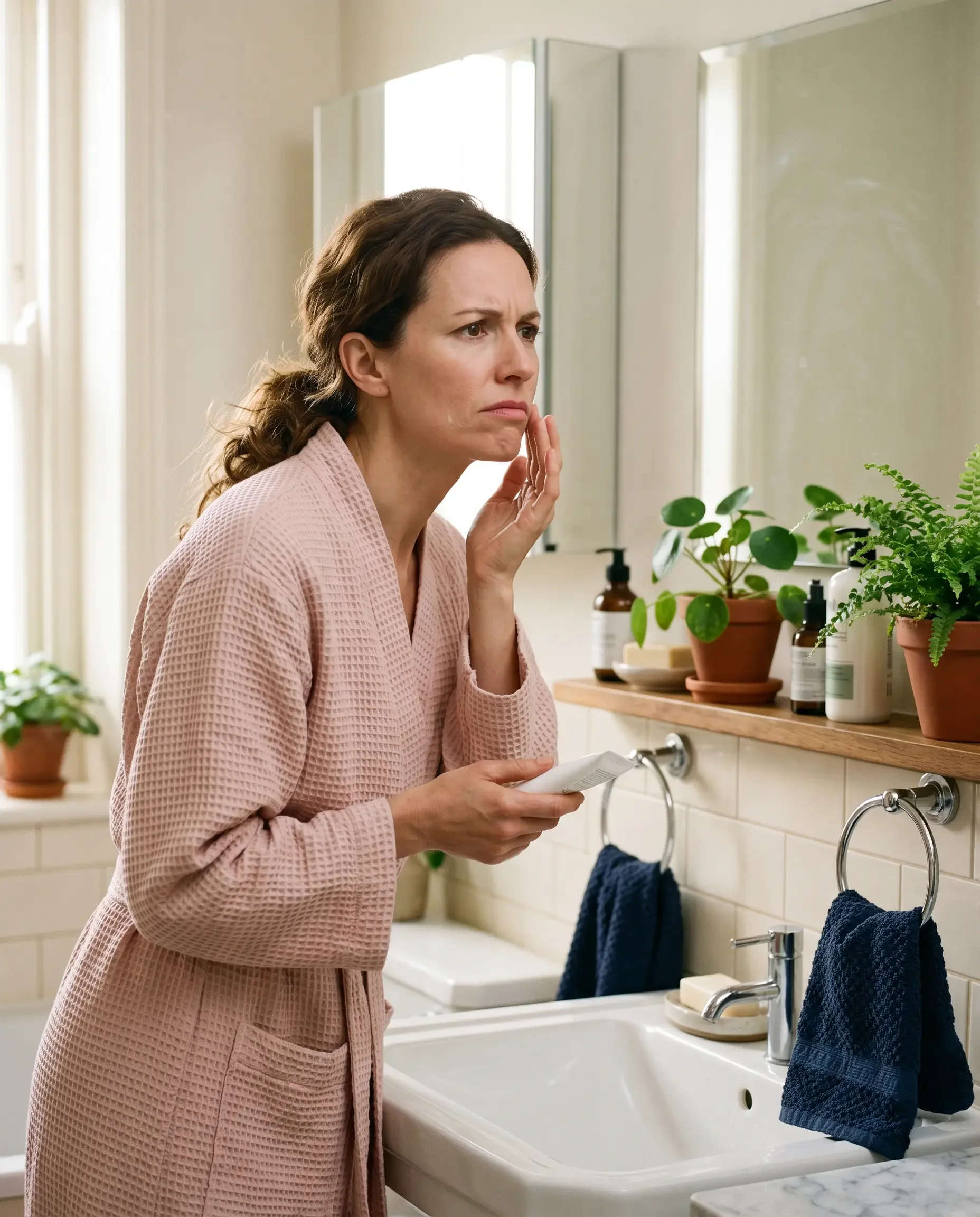
Estrogen has a direct relationship with skin structure. It supports collagen production, helps the skin retain moisture, and maintains the barrier function that keeps irritants out and hydration in. As estrogen levels begin to decline, often starting in the mid-thirties, the skin responds in ways that are visible and sometimes frustrating: increased dryness, reduced firmness, greater sensitivity, and slower healing of minor irritation or damage.
"Low estrogen makes you drier all over, including your skin, eyes, vagina, and ears," says Dr. Sameena Rahman, leading to widespread dryness and itchiness that can feel most pronounced in dry climates or during winter months. This is not a skincare problem with a skincare solution. The dryness is systemic, reflecting hormonal changes, not a failure of your moisturizer.
Adult acne is another common and often surprising symptom. Breakouts that appear along the chin and jawline are frequently hormonal in origin, driven by the fluctuating estrogen and progesterone levels that characterize perimenopause. Women who never dealt with acne in their twenties sometimes find themselves managing it in their forties, which can feel disorienting without a clear explanation for why it is happening.
Cortisol adds another layer to this picture. Elevated stress hormones increase inflammation in the skin, stimulate oil production, and slow the skin's natural repair processes. For women managing significant life demands during midlife, this cortisol effect can compound the changes already underway from shifting reproductive hormones.
The Hormonal Roots of Sleep Disruption
Estrogen and progesterone both play active roles in regulating sleep. Progesterone has a naturally calming, mildly sedative effect that supports the transition into and through the deeper stages of sleep. Estrogen helps regulate body temperature, which is closely tied to sleep quality. When both hormones begin fluctuating during perimenopause, the disruption to sleep architecture can be significant.
Night sweats and hot flashes are the most commonly discussed culprits, and for good reason. They disrupt sleep through the body's thermoregulation, waking women at critical points in their sleep cycle and making it difficult to return to deep, restorative sleep. But the impact goes beyond these acute episodes. Research shows that women in perimenopause and beyond tend to experience less REM sleep overall and report feeling less rested even on nights when they did not wake with hot flashes.
Sleep problems linked to hormonal changes can begin as early as the late thirties, and they tend to be underrecognized in clinical settings because they do not always look like classic insomnia. Women may fall asleep without difficulty and still wake repeatedly or feel persistently unrefreshed. Some women develop sleep apnea during this transition at rates approaching those seen in men, a significant shift from premenopausal patterns that often go unscreened.
Why Fatigue Persists Even When You're Sleeping
The energy piece is where many women feel most confused because conventional advice to get more sleep does not always solve the problem. Hormonal fatigue is not simply the result of insufficient hours of sleep. It reflects disruptions to the systems your body uses to regulate and generate energy throughout the day.
Estrogen and progesterone fluctuations directly affect cellular energy metabolism, not just sleep quality. Thyroid function is another critical variable. Hypothyroidism, which is more common in women and increases in prevalence during midlife, slows metabolic function and produces fatigue, weight changes, and cognitive fog that are often mistaken for menopause symptoms or dismissed as stress. Cortisol dysregulation, particularly in women managing high chronic stress loads, disrupts the daily cortisol rhythm that is supposed to provide energy in the morning and taper toward evening, leaving some women wired at night and depleted during the day.
The symptom profile of hormonal fatigue tends to be specific: feeling exhausted despite adequate sleep, difficulty initiating tasks, cognitive fog that makes concentration harder than it used to be, and emotional flatness or irritability that does not match the circumstances. These are not personality traits or signs of depression that should be treated in isolation. They are often hormonal signals that can be identified and addressed.

What a Comprehensive Evaluation Actually Looks Like
Fewer than 20% of U.S. primary care physicians have received formal training in menopause medicine. That gap in the standard of care is not a criticism of individual clinicians. It is a structural reality that explains why so many women leave appointments with their concerns acknowledged but not addressed, carrying prescriptions for sleep aids or referrals to dermatologists without anyone connecting the dots across their symptoms.
At Ms.Medicine, our providers are certified by the Menopause Society, a credential that reflects advanced training in comprehensive hormonal evaluation. The assessment process is built around understanding the full picture. Initial visits last 60 to 90 minutes, which is enough time to take a thorough history, review a symptom matrix covering more than 30 potential presentations, and discuss which laboratory tests make sense.
Lab work at Ms. Medicine evaluates estrogen, progesterone, and testosterone levels, as well as thyroid function, vitamin D status, and inflammatory markers. The goal is not to find a single hormone that is out of range, but to understand how these systems interact and where targeted intervention would have the most meaningful impact. Follow-up care is available via secure messaging, so questions and adjustments do not have to wait until the next scheduled appointment.
Where Treatment Can Take You

Treating hormonal fluctuations in midlife is not about restoring the hormone levels of your twenties or eliminating the natural progression through menopause. It is about addressing the symptoms affecting your quality of life with evidence-based interventions appropriately matched to your individual situation.
Menopausal hormone therapy remains the most effective available treatment for hot flashes, night sweats, and the sleep disruption that accompanies them. For women who are candidates, systemic estrogen therapy can reduce these symptoms substantially, with most women experiencing significant relief. Thyroid optimization, stress reduction, and lifestyle interventions all have roles to play depending on what your evaluation reveals.
The skin changes, the sleep disruption, the fatigue that does not resolve with rest: these are not separate problems requiring separate specialists. They are related symptoms with underlying causes that can be identified and treated. That is the kind of care Ms.Medicine is built to provide.
Ready to understand what your hormones are doing?
Find a Ms.Medicine provider near you and schedule your Personal Hormone Assessment at msmedicine.com.


The anti-aging aisle promises to turn back the clock on a woman's face — but the bloodwork, the bone density, the muscle she's quietly losing often go years without a look. Dr. Kelli Peiffer makes the case for a different measure of aging well: strength, capacity, and clarity.