
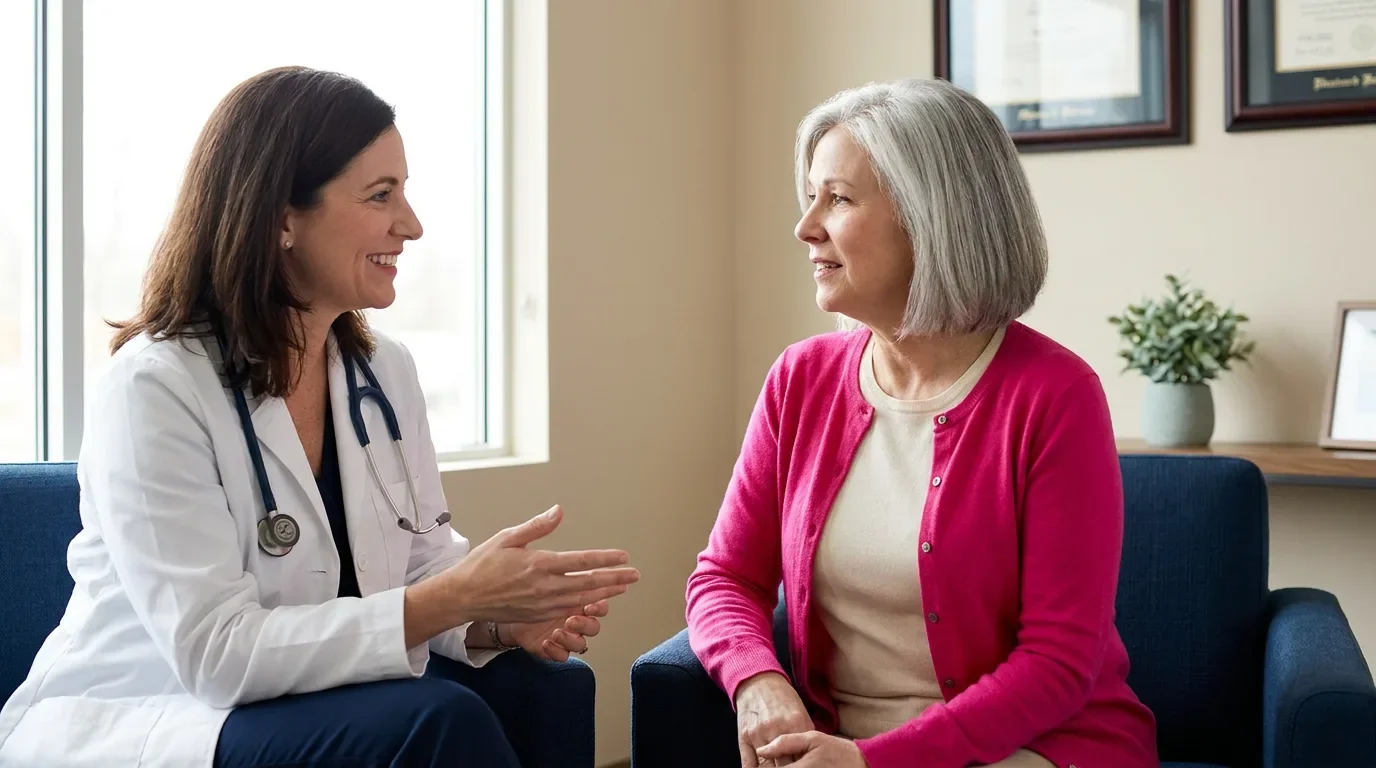
Featuring insights from Dr. Sharon Bober, PhD, Director of the Sexual Health Program at Dana-Farber Cancer Institute, and Dr. Laila Agrawal, MD, from the Ms.Medicine OncoMenopause survivHERS speaker series.
Medically reviewed by Dr. Sameena Rahman, owner and founder of GYN & Sexual Medicine Collective
Last updated: November, 2026
Months after treatment ends, the messages start to arrive. You look great. So glad you're back to normal. It must feel wonderful to have that behind you. She smiles and agrees, because it is kind, and because it is partly true. What she does not say is that she has quietly started going to bed after her partner is already asleep, because lying there awake together feels like more than she can manage right now. Nothing about her body feels like it did before, and everyone around her seems ready for a version of normal that she is not sure exists anymore.
If that gap feels familiar, this post is for you. It is the emotional companion to the clinical questions about dryness, pain, and treatment. It covers why "back to normal" is the wrong goal, why desire rarely works the way we were taught, how the cycle of anxiety and avoidance takes hold, and how couples begin again. None of this is a set of instructions to perform. It is a way of understanding a chapter that is genuinely new.
What stress is actually doing to your body
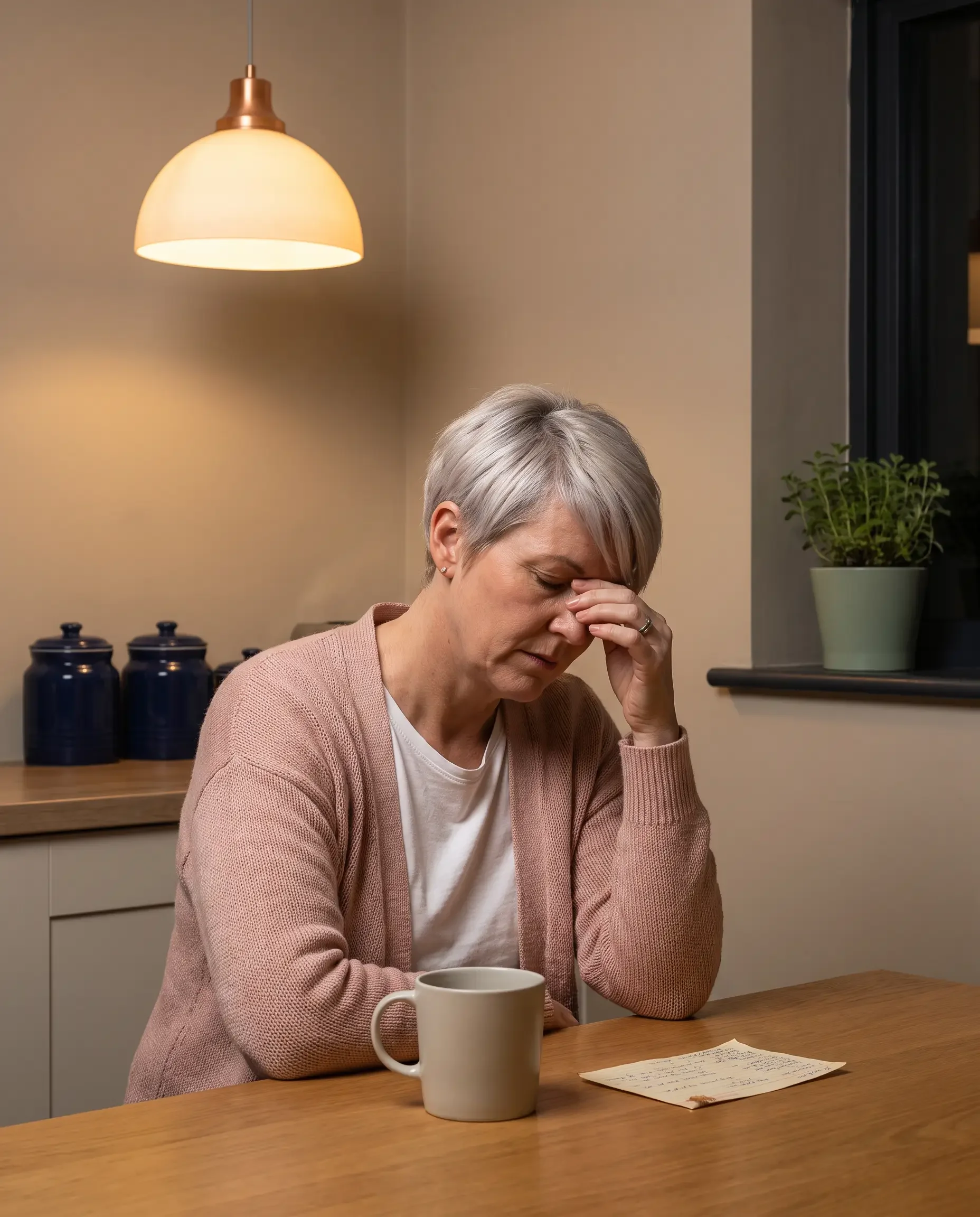
Stress is not only a feeling. It is a full-body event. When you are under pressure, the body triggers its fight-or-flight response, and as the National Center for Complementary and Integrative Health describes, heart rate, breathing rate, and blood pressure rise, muscles tense, and you sweat more. That response is useful in short bursts. The trouble comes when it never fully switches off.
When stress stretches on for weeks, the same agency notes it may contribute to or worsen digestive problems, headaches, and sleep disorders, and it is closely tied to anxiety and low mood. This is the quiet damage of a hard December. The exhaustion, the restless nights, the short fuse, the sense that your own routines have vanished are not personal failings. They are physiology responding to a load it was never meant to carry indefinitely.
Naming that is the first act of intention. You cannot manage what you have talked yourself out of taking seriously.
Why the season lands harder on women
The holiday load is rarely shared evenly. In an American Psychiatric Association survey, mothers were 14 percentage points more likely than fathers to say their stress level rises during the holidays, 53% compared with 39%. Much of that gap traces to the invisible work of the season, the planning, remembering, buying, wrapping, hosting, and smoothing over that tends to fall to women by default.
More recent polling shows the pressure has not eased. A 2025 American Psychiatric Association poll found 41% of adults expected more holiday stress than the year before, with worries about finances, grief, and family dynamics near the top of the list. For women already carrying a full year of caregiving, the holidays can feel less like a break and more like a final, concentrated sprint.
None of this means the joy is not real. It means the joy has a cost, and it is worth being honest about who is paying it.
The problem with "back to normal"
Survivorship comes with enormous pressure to be grateful. As Dr. Sharon Bober described in her Ms.Medicine talk, gratitude has become the expected way to move forward, and as a psychologist she understands the appeal. What it misses is that gratitude and loss can be true at the same time. Bodies are not the same after cancer, and very little is exactly as it was, and pretending otherwise leaves survivors with nowhere to put the real grief that comes with change.
The timing makes it harder. Often the people closest to a survivor are ready for her to move on at precisely the moment she is finally still enough to process what happened. As Dr. Bober put it, women tell her some version of the same thing again and again:
"People get messages all the time about, you look great, I'm so glad things are normal, I'm so glad you're healthy. And that is often when survivors for the first time have a minute to breathe, and actually digest what they've just been through."
Seen that way, the goal is not to rewind to an earlier version of your sex life. It is to write a new chapter rather than trying to reproduce an old one exactly as it was. That reframe is not a consolation prize. It is the thing that finally makes progress possible.
Desire is not a light switch
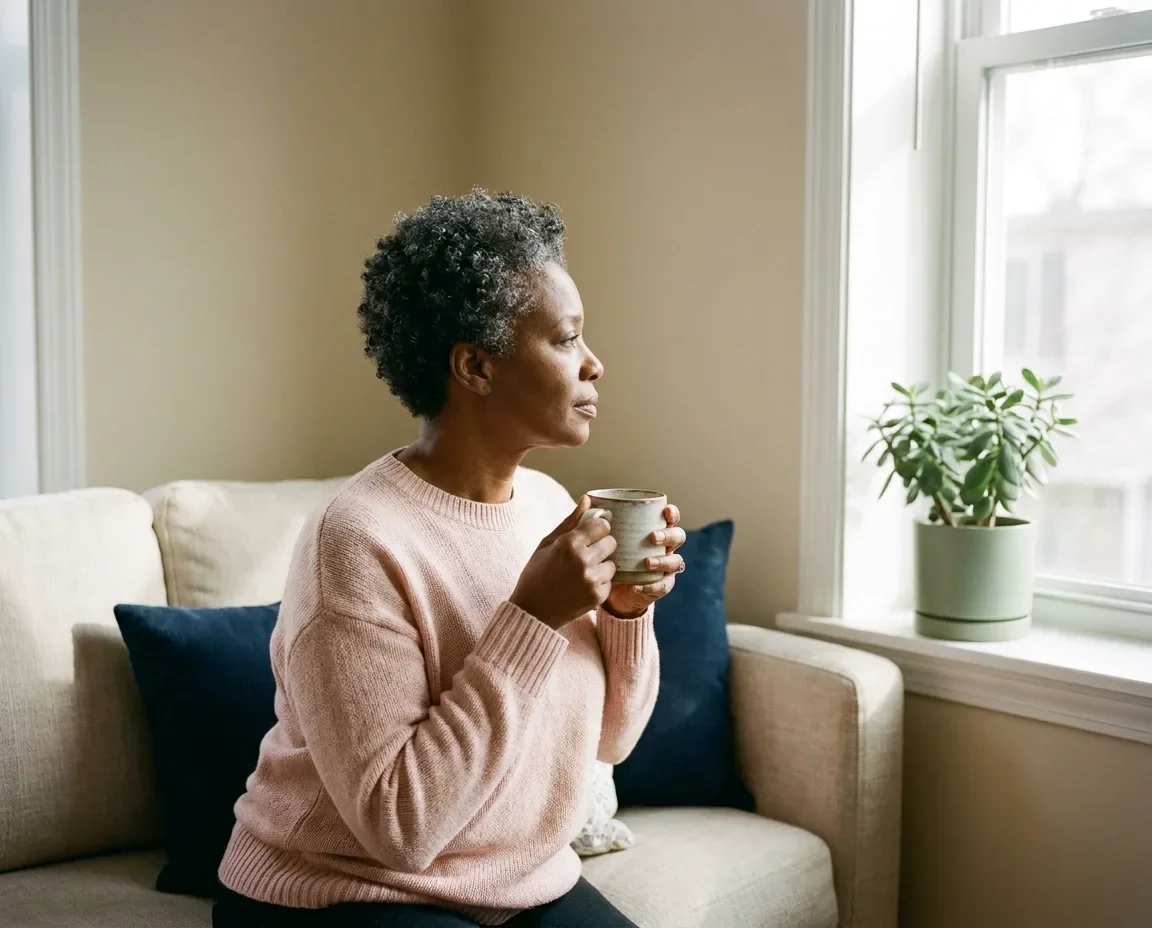
The single most common concern women raise after cancer is low desire, and it is also the most misunderstood. Most of us absorbed the idea that desire is supposed to arrive on its own, unbidden, like a switch flipping on. For most women, and especially after cancer, that is simply not how it works.
Dr. Bober points to the model of responsive desire, described by researcher Rosemary Basson more than twenty-five years ago. In this understanding, desire is not the starting point. It emerges in response to something that already feels sensual, connected, or arousing, and it has to be cultivated rather than waited for. One of her patients captured it better than any textbook, comparing it to a toaster: you put the bread in, and it has to warm up before it pops.
That shift changes what you are looking for:
Anticipation can replace spontaneity. Instead of waiting to be struck by desire, you can build toward something you look forward to, the way the smell of dessert can suddenly make room for a bite you did not want a minute earlier.
Warming up is normal, not a malfunction. Like starting to exercise on a morning you did not feel like it, the willingness often follows the first small step rather than preceding it.
New scripts are part of recovery. After cancer, it is common to need new habits, and support through memory, fantasy, or anything else that helps set the stage.

The anxiety and avoidance cycle
One reason intimacy stalls has less to do with the body than with a loop that is easy to fall into and hard to see from the inside. Dr. Bober describes it as the anxiety and avoidance cycle, and it tends to run like this:
Something about sexual health feels distressing. It has been a long time, there is pain or discomfort, or you do not feel like yourself.
That understandably generates anxiety, fear, or frustration.
Negative self-talk follows. It is never going to get better. This is the price I have to pay.
Avoidance feels like the only relief, so you steer around the whole subject.
The relief is real but brief, and it quietly teaches the brain that this is a thing to keep avoiding, which deepens the worry over time.
The avoidance often hides in small, deniable choices, like going to bed at different times, or making sure not to brush too close to a partner in the kitchen in case a touch leads somewhere. Naming the cycle is what makes it possible to step out of it, by shifting from distress as the starting point toward small, tolerable goals for recovery.
Talking to yourself differently
Much of that cycle is powered by an internal voice most people would never use on someone they love. As Dr. Bober notes, survivors say things to themselves like no one would ever want to be with someone with a scar like this, comments they would never say out loud to another person. Reframing that voice is a real part of the work, not a platitude.
A gentler internal script draws on the same self-compassion Dr. Agrawal raises when she reminds patients that body image is not about vanity. It is about how you feel in your body, and it can improve with support and, when helpful, counseling. Dr. Bober frames it as extending to yourself the kindness you would offer a friend, and paying attention to what your body can do and has carried you through, rather than only how it looks. That is often where a sense of being at home in your body starts to return.
This is a couple's chapter, not a solo one
For anyone in a relationship, cancer is a shared experience, and so is sexual recovery. Dr. Bober is direct that the aim is not to keep doing exactly what you always did, but to build something together with more room in it. That means leading with curiosity, pleasure, and sensuality rather than treating sex as a performance with a required outcome, starting slowly, and expanding the repertoire of what counts as intimacy.
It also means talking, which is precisely what tends to get avoided. If these conversations were difficult before cancer, they will not be easier now, and that is a reason to seek couples-focused support rather than a sign of failure. Her recommendation is to approach it like any other part of survivorship, whether that is nutrition, exercise, or menopause care, with an honest action plan and a shared sense of where you want to go. If you are dating rather than partnered, the same principles apply to the new connections ahead.

Where the new chapter begins
The throughline is that sexual health after cancer is not a test of whether you can get back to who you were. It is the start of something new, and it deserves to be treated as a real part of your care rather than an awkward afterthought raised in the last thirty seconds of an appointment, if it is raised at all.
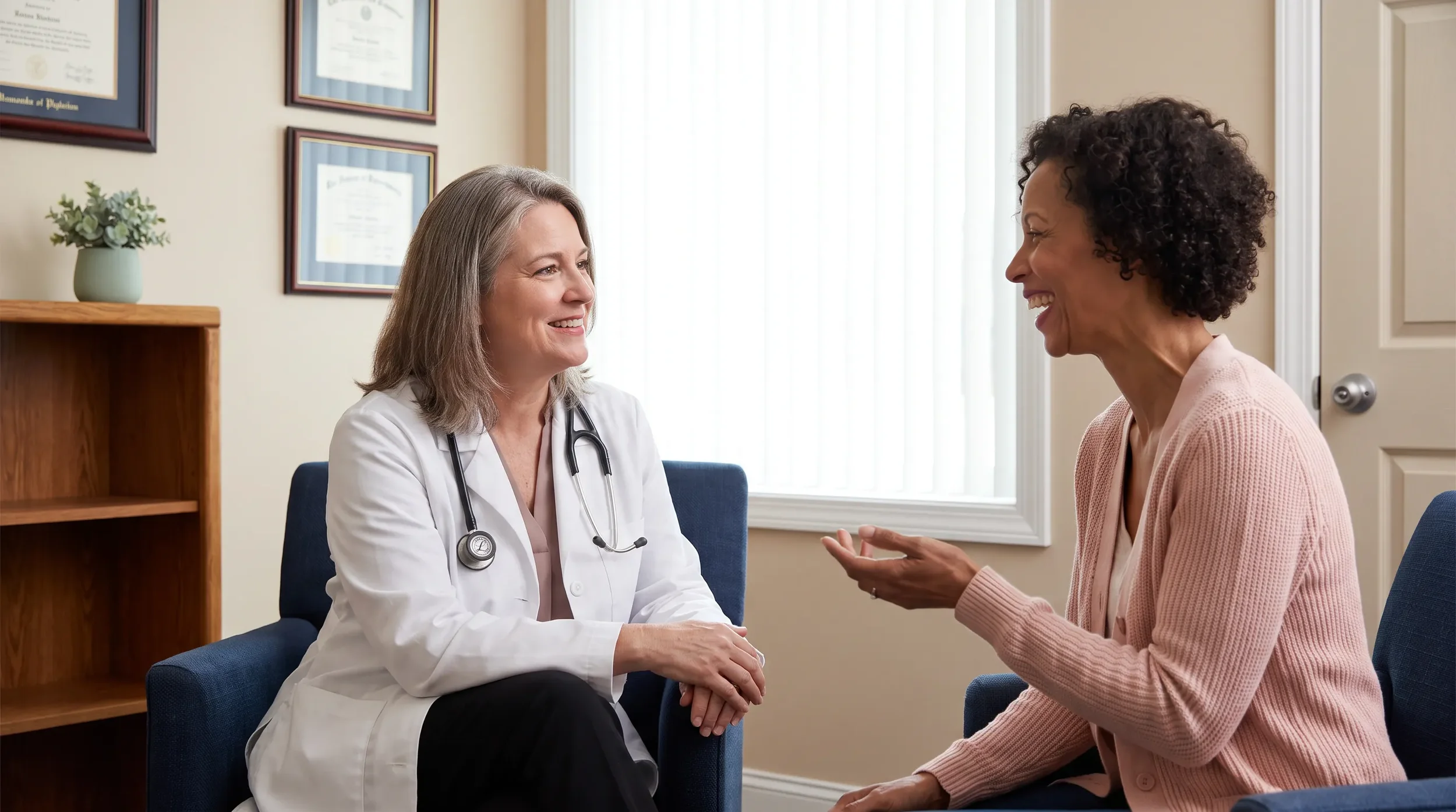
That is the approach at Ms.Medicine, where physicians treat sexual health as a legitimate clinical concern and have the time to address the physical and the emotional together. If intimacy is something you have been avoiding, or grieving, or simply have not known how to bring up, you can start by naming it out loud to a physician who will take it seriously and help you build a plan. And if grief or low mood has grown heavy, that is worth saying too, because support is available and you do not have to carry it alone.

The list starts small. By mid-December it has tripled, and around eleven at night you realize you have not sat down all day. Here is what that load does to your body, why it lands on women first, and the boundaries that leave room for the season you wanted.