
Do I Have PCOS? Early Signs Women Often Miss

Last updated: April 2026
If you've been Googling "do I have PCOS" at midnight, reading through symptom lists and thinking that sounds like me, you're not alone. Millions of women suspect something is off with their health, but struggle to get straight answers from a healthcare system that wasn't built with them in mind.
Maybe you've mentioned your irregular periods to a doctor only to be told they're "nothing to worry about." Maybe you've been fighting stubborn weight gain and heard the same tired advice about eating less and moving more. Maybe you've been dealing with acne that hasn't let up since your twenties, and you're wondering why no one seems concerned.
Here's what we want you to know: your symptoms are real, they matter, and they deserve more than a shrug.
Polycystic Ovary Syndrome affects roughly 5 to 10 percent of women aged 18 to 44, making it one of the most common hormonal disorders in women of reproductive age. And yet, many women go years without a diagnosis because the early signs are subtle, varied, and far too easy to brush off in a rushed 15-minute appointment.
What Actually Goes Into a PCOS Diagnosis
There's a specific set of criteria the medical community uses to diagnose PCOS, called the Rotterdam criteria. To meet the threshold, you need at least two out of three key features:
Irregular or absent menstrual cycles (what doctors call oligo-anovulation).
Clinical signs of excess androgens, like persistent acne, excessive hair growth, or thinning hair, or lab work showing elevated levels of male hormones.
Polycystic ovarian morphology, which means multiple small follicles are visible on an ultrasound.
Here's the part that surprises a lot of women: you don't need all three to be diagnosed. You can absolutely have PCOS without cysts showing up on your ovaries. The name itself is misleading, and the confusion it causes keeps women from pursuing the answers they deserve.
This is exactly why the question "Do I have PCOS?" can't be answered with a quick symptom checklist or a single lab test. It takes a provider who understands the full hormonal picture and is willing to dig deeper than surface-level screenings.
The Symptoms That Keep Getting Dismissed
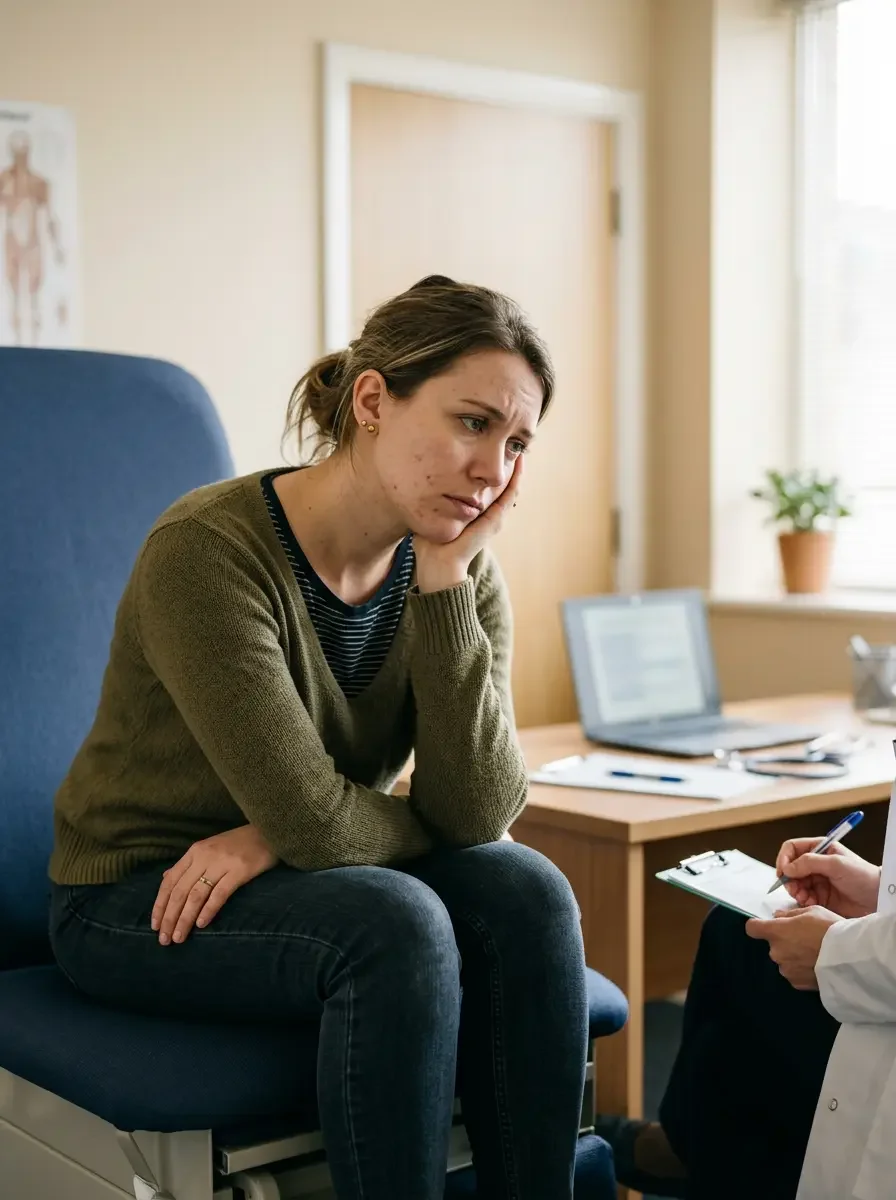
One of the most frustrating parts of living with undiagnosed PCOS is hearing that your symptoms are "normal." They're not. They're your body sending clear signals that something needs attention.
Irregular periods are one of the earliest and most common signs, but they're also one of the most frequently dismissed. If your cycles regularly stretch beyond 35 days, are shorter than 21 days, if you skip periods altogether, or if your bleeding is unusually heavy, that pattern is worth investigating. It's not just "how your body works." It could be the first sign of a hormonal imbalance that connects to much bigger health concerns down the road.
Acne that sticks around well past your teenage years, particularly along the jawline and chin, is another red flag that often gets chalked up to stress or skincare habits. But that specific pattern of breakouts can point to elevated androgen levels, and it's one of the hallmark signs of PCOS that a knowledgeable provider would want to explore further.
Then there's the weight piece. So many women with PCOS describe doing everything "right" and still not seeing results. That's not a failure of willpower. Up to 70 percent of women with PCOS have some degree of insulin resistance, which fundamentally changes how the body processes and stores energy. It means weight management isn't just harder with PCOS. It's a different metabolic challenge entirely, and it calls for a different approach than generic lifestyle advice.
Early Signs You Might Not Realize Are Connected
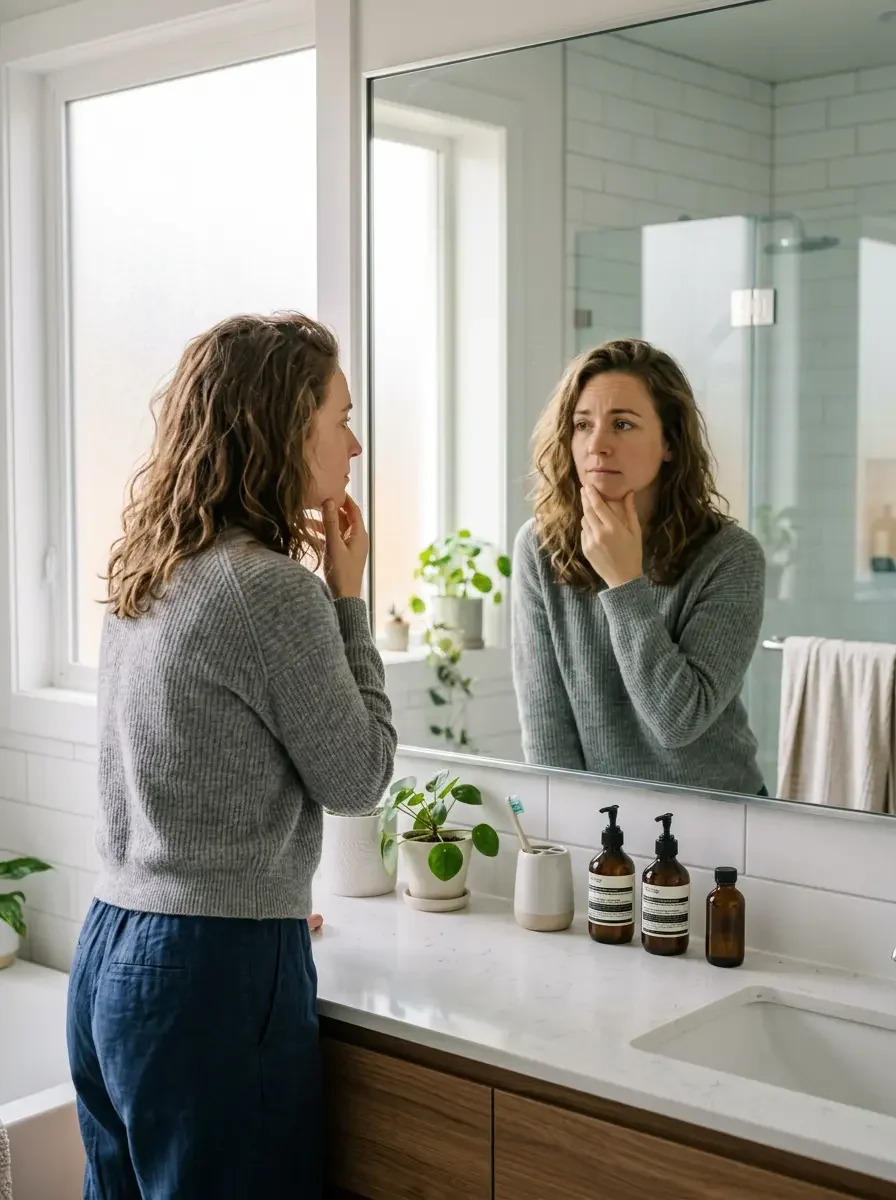
When you look at PCOS symptoms one at a time, they can seem minor or unrelated. But when you step back and see them as a pattern, the picture gets much clearer.
Excess hair growth on the face, chest, or back, a condition called hirsutism, is one of the most telling signs. A lot of women feel embarrassed to bring this up with a provider, but it's an important clinical indicator of elevated androgens that should lead to hormonal testing, not suggestions for laser hair removal.
Dark, velvety patches of skin around the neck, underarms, or groin are another clue. This is called acanthosis nigricans, and it often signals insulin resistance. Most women have no idea this skin change has anything to do with their hormones or their menstrual cycle, but it's all connected.
Hair thinning or a pattern of hair loss that looks more like what you'd expect in men is yet another piece of the puzzle. On its own, it might get blamed on stress or aging. But paired with other symptoms, it becomes a meaningful indicator that points toward PCOS and warrants a closer look at your hormonal health.
Why No Two Cases Look the Same
If you've ever compared your experience with a friend who also has PCOS and thought "that doesn't sound anything like what I'm going through," there's a good reason.
Research has identified four distinct types of PCOS, each with a different combination of symptoms. The most common involves elevated Anti-Mullerian Hormone levels combined with ovulatory dysfunction, affecting about 85 percent of women with the condition. But other presentations focus more heavily on androgenic symptoms like hirsutism and acne, or involve all three Rotterdam criteria at once:
Type A: includes hyperandrogenism, ovulatory dysfunction, and polycystic ovaries.
Type B: includes hyperandrogenism and ovulatory dysfunction
Type C: includes hyperandrogenism and polycystic ovaries
Type D: includes ovulatory dysfunction and polycystic ovaries
Your individual hormonal profile, your metabolic health, your genetics, and even your body composition all influence how PCOS shows up for you. This kind of complexity is exactly why a generalist approach so often falls short. PCOS isn't one-size-fits-all, and the care you receive shouldn't be either.
Busting a Few Myths While We're Here
Let's clear up some of the misinformation that makes the path to diagnosis even harder than it needs to be.
Myth #1
You do not need ovarian cysts to have PCOS. The word "polycystic" refers to the appearance of small follicles on the ovaries, not actual cysts. Plenty of women with PCOS have completely normal-looking ovaries on ultrasound.
Myth #2
PCOS does not mean you can't get pregnant. It can make conception more complex, but many women with PCOS conceive naturally or with the right support. What matters most is having a provider who understands the condition and can guide your care accordingly.
Myth #3
And PCOS is not caused by anything you did or didn't do. It's a genetic hormonal condition. While healthy habits can help manage symptoms, no amount of lifestyle change will make it disappear. Women of all sizes and body types can have PCOS, and every one of them deserves proper care.
What Getting Real Answers Actually Looks Like
At Ms.Medicine, we approach PCOS the way it should be approached: thoroughly, thoughtfully, and with the understanding that your symptoms are connected to something real.
Our providers specialize in women's hormonal health. That means when you describe what you've been experiencing, you're talking to someone who recognizes the patterns, understands the nuances between PCOS phenotypes, and knows how to evaluate the full picture rather than just checking a few boxes.
We use the Rotterdam criteria the way they're meant to be used. We look at your metabolic health alongside your reproductive health. We take time to understand not just your lab results but how you're actually feeling day to day, because PCOS impacts your energy, your mood, your confidence, and your quality of life in ways that don't always show up on a blood panel.
Our concierge model exists for exactly this reason. You get extended appointments, direct access to your provider, and the kind of unhurried, personalized attention that complex conditions like PCOS demand. No more being squeezed into a 15-minute slot. No more leaving an appointment feeling like you still don't have answers.
If you've been wondering whether what you're experiencing might be PCOS, trust that instinct. You know your body, and you deserve a provider who will listen.
Learn more about how Ms.Medicine can help you get the clarity and care you've been looking for.

A woman wakes drenched at 2 a.m., days after surgery or weeks into treatment, and nothing about it matches the gradual menopause her friends describe. That's because treatment-induced menopause isn't a milder version of aging — it's its own biological event, and it deserves its own kind of care.