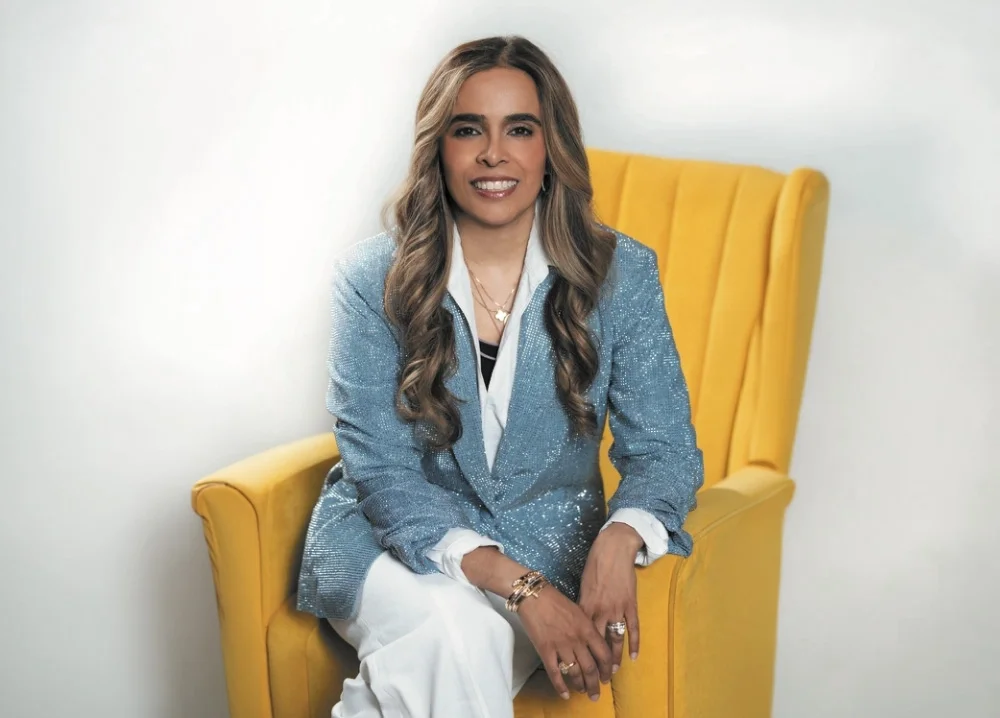
Reclaiming "Brown Girls Disease": Dr. Sameena Rahman on Walking Away From aSystem That Dismissed Women, and Building Her Own
Last updated: October 2026
In certain medical spaces, there is an offensive phrase for South Asian women who had vaginismus or couldn't tolerate a pelvic exam. People called it "brown girls disease”—a clear dismissal of real experience and a marker of education gaps in sexual medicine.
On October 6, Dr. Rahman is putting that phrase on the cover of her first book, “Brown Girls’ Disease”?: A Guide to Sexual Health and Empowerment Through a South Asian Lens.
"It was derogatory," she said, "so I've just tried to reclaim it."
Reclaiming what the system got wrong is something of a pattern for her. Before she took back the derogatory phrase, she took back her career. After 11 years in insurance-based gynecology, she left to build GSM, her concierge gynecology and sexual medicine practice in Chicago and a Ms.Medicine affiliate.
Stories of Dismissal
For years, Dr. Rahman was one of the few gynecologists in her area of Chicago who both accepted insurance and offered menopause care. That made her very busy, and before menopause care went mainstream in the last four or five years, she was seeing five or six new consults a day.
The volume wasn’t the only problem. Issues with coverage for menopause care and complex cases meant continued roadblocks for Dr. Rahman and her patients, with costs routinely landing on patients' deductibles. And the stories she heard, of women dismissed again and again by other clinicians, followed her home.
"I'm somebody that absorbs my patients' concerns," she said. "Hearing their stories of dismissal time and time again wore on me."
She was also entering perimenopause herself. The care she wanted to give--60 to 90 minutes with a patient with time to listen, educate, learn, and coordinate the right care—was impossible with the schedule a traditional medical practice required. The compensation didn't make up for it either.
"I told myself, 'This is not the kind of practice that I want,'" she said. "I don't want to provide rushed care. I want to have patients that I can make shared decisions with, and to really be nuanced in the care that I give."
Most Women Don't Fit the Algorithm
Dr. Rahman doesn't think patients necessarily set out looking for concierge care. Most would prefer to get what they need through a traditional practice, but high volume is a real problem.
"The care becomes very automated," she said. "It becomes very much an algorithm, and most women don't fall into this algorithm."
What her patients are looking for is consistently that they want to be heard, they want to be educated, and they want to leave knowing they made a decision with the help of an evidence-based clinician, not handed one on the way out the door.
She's blunt about where the fault lies. It isn't with individual doctors, and it isn't with patients.
"The systems that we have in place are just not meant for patients to succeed in health, and they're not meant for physicians to succeed," she said. "So we have to create our own system."
Team Pink
Creating her own system and practice didn't mean doing it alone. Ask Dr. Rahman about her practice, and she'll talk about how grateful she is for her team.
"We're team pink over here," she said. "I couldn't do anything without them."
Karen Bradley, MSN, FNP-BC, a family nurse practitioner, brings a family medicine lens and a more holistic view of each patient. She also runs an aesthetics practice, which gives patients room to raise other concerns in the same visit. “She can really relate to so many of the patients in so many different ways,” she said. “They love her, as they should, because she's amazing.”
When asked about Grace Prete, DPT, who handles pelvic floor therapy, Dr. Rahman said, “She’s a pelvic wizard. She does such an amazing job with the pelvic floor for my patients.” Medical assistant Yadi Luna and marketing and membership coordinator Allie Kirkwood round out Team Pink.
The model is genuinely multidisciplinary. Pelvic floor work is central to Dr. Rahman's care for both midlife women and patients seeking help with sexual dysfunction. "Most of my patients could not succeed without the help of all three of us," she said.
Access is part of the design, too. Everyone on the team can respond to patients through the practice's app, so a question doesn't sit in a queue waiting on one person. That's how she can promise patients something the traditional system rarely does: that they'll actually be heard.
A Question of Bandwidth
Dr. Rahman could have launched GSM on her own. Dr. Lisa Larkin, MD, FACP, MSCP, IF, Ms.Medicine's founder, told her as much, but bandwidth was the issue, not capability.
She was drawn to Ms.Medicine because it was physician-run and because of its emphasis on education: two things she says she admired in what Dr. Larkin was building. What sealed it was the support Ms.Medicine provides during the transition.
"Having that extra layer of support to help me figure out the best way to do it was so important," she said.
That's a distinction for any physician considering the move. The question usually isn't whether you can run a practice but whether you can run a practice, see patients, and keep your own life intact at the same time without help.
For the past year, Dr. Rahman has served as Ms.Medicine's Director of Gynecology, bringing gynecology, women's health, and sexual health support into the network. Much of the role is conversations with other gynecologists who are trying to decide if concierge care with the Ms.Medicine team is right for them.
When Your Audience Becomes Your Panel
Many patients know Dr. Rahman as Gyno Girl before they ever book a visit. Between her podcast, Instagram, YouTube, and Substack, her education reaches far past Chicago, and it feeds the practice directly.
"A lot of people find me through my social media presence," she said. Most of her panel is local to Chicago, but people have found her across the country and globe. Patients have flown in from other countries to see her, and she's licensed in California and a few other states, seeing patients via telehealth. For people in states where she isn't licensed, she offers educational consults on complex genital, pelvic, and menopausal concerns, providing insight on what might be going on, what should be offered, and how it should be evaluated.
The content also extends her care after a visit ends. When a patient wants to go deeper, she can point them to an episode where she covered the topic in detail or interviewed an expert. "Why don't you take a listen to this?" she'll tell them. "It blew my mind. It might blow your mind as well."
For physicians building a concierge practice, it's a reminder that education isn't separate from the business. Done consistently, it's how the right patients find you.
Seven Years, One Book Coach, and a Title Starting Conversations
The book has been a long time coming. Dr. Rahman first had the idea seven or eight years ago and wrote chapters in fits and starts. Then came COVID, and years of caregiving for parents and in-laws. About two years ago, she hired a book coach and committed to finishing it.
The result is a full-scope guide to sexual health. It covers anatomy and why we should name it plainly instead of reaching for euphemisms. It covers diagnoses that have historically been dismissed, from perimenopause to persistent genital arousal to endometriosis. And it centers the patients most often overlooked in sexual medicine: women of color who face chronic dismissal rooted in implicit bias, cancer survivors, and women living with trauma or mental health concerns.
She knows the title makes some readers pause. "People are like, 'Wait, is this book for me?' It is. It's for everyone, because it is a book about women and about the organs that we dismiss." Clinicians will find it useful, too. She describes it as a 101 for anyone with a background in sexual medicine or women's health.
The launch tour starts in New York City on October 6 with morning media and a sip-and-shop hosted at Veronica Beard, which will donate 10% of the evening's sales to Tight Lipped and other women's sexual health groups. From there:
New York City: launch party at Veronica Beard
Chicago: launch party at Veronica Beard (October 8), Menopalooza on World Menopause Day (October 18), and a signing at the Book Loft in Oak Park (October 28)
Charlotte, NC: event hosted by friend and fellow sexual medicine and menopause expert Dr. Sasha Davenport.
Worcester, MA: speaking at UMass's OB-GYN 50th anniversary celebration, where she did her residency, plus a book signing
Los Angeles: a book launch, conversation, and signing event with WUUM--Providing expert-led physical, emotional, somatic, and spiritual support — from puberty, through pregnancy, postpartum, perimenopause and beyond.
Cleveland: a lunch and learn hosted by the local hospital system's sexual medicine division, organized by Dr. Rachel Pope
Palo Alto & Los Angeles: events happening later this fall and December, with more dates pending
The book is available at Bookshop.org, Barnes & Noble, Amazon, through most major retailers, and at every tour event.
The Mission Behind It All
The practice, the platform, and the book all trace back to the same goal. Dr. Rahman wants to end dismissal in women's health. She wants women to feel like champions of their own bodies, with the language to describe their organs, their symptoms, and their culture without anything holding them back from care.
"We have the words," she said. "We can actually get the success that we need in our health as well. We should demand that."
For physicians who have felt that same struggle inside the traditional system: If the system wasn't built for you or your patients to succeed, you can build one that is.
GSM is a concierge gynecology and sexual medicine practice in Chicago, Illinois, offering multidisciplinary care for menopause, sexual health, pelvic floor concerns, and more. To learn more or schedule a Meet and Greet with Dr. Rahman, visit the GSM website or call 312-574-3434.
Physicians interested in learning more about opening their own concierge practice through Ms.Medicine can visit msmedicine.com.