Why More Physicians Are Leaving Traditional Medicine for Concierge Care

Last Updated: May 2026
There is a number that tends to stop physicians mid-scroll: nearly 42 percent. That is the share of U.S. physicians who reported at least one symptom of burnout in 2025, according to the American Medical Association's most recent national data. The figure has improved from a COVID-era peak of 62.8 percent in 2021, and researchers are quick to note the progress. But improvement is not the same as resolution. One in four physicians is currently considering leaving clinical medicine altogether. And the reasons are not mysterious.
Something structural is breaking down in the traditional practice of medicine. The physicians leaving are not the ones who were unsuited for the work. They are often the most committed ones — the physicians who entered the field to do something meaningful and found themselves, years in, doing something else entirely.
The Numbers Behind the Exit
The data on physician burnout tells a consistent story, regardless of which organization is measuring.
In 2025, 41.9 percent of physicians reported experiencing at least one symptom of burnout, down from 43.2 percent in 2024 and 48.2 percent in 2023, according to the AMA. That declining trend reflects real institutional investment in physician wellness programs at some health systems. It does not, however, mean the underlying structural pressures have eased.
When asked to submit the primary sources of on-the-job stress, physicians consistently named the same themes: ineffective EHR systems, inadequate staffing, concerns about leadership transparency and support, and excessive administrative tasks.
A recent time-allocation study found that on average, physicians spend 49 percent of their day in the EHR, with only 27 percent spent in direct patient care. Read that again slowly. In a profession defined by the relationship between a physician and a patient, the time spent on documentation now nearly doubles the time spent on care.
A 2025 survey found that 35 percent of physicians have considered leaving medical practice since the start of that year, with personal burnout listed as the top reason. Among primary care and family medicine physicians specifically, that figure climbed to 40 percent.
And at the practice level, a 2024 MGMA Stat poll found that 27 percent of medical groups reported physician departures or early retirements that year due to burnout.
These are not numbers about a workforce that is struggling to cope. These are numbers about a workforce that has been asked to operate in conditions that conflict with the reason most physicians chose medicine in the first place.
What the Day Actually Looks Like
Step into a typical day in a traditional primary care or internal medicine practice. The schedule has been built around 15- to 20-minute appointment slots, because that is what the reimbursement model requires. A physician running on time is already behind.
A patient comes in. She is 52. She has been sleeping poorly for two years, has noticed changes in her mood, her weight, her energy. She mentions it briefly, almost apologetically, because she knows how these appointments go. There is time for one concern today. She picks the one that feels most pressing in the moment, and the others go unspoken.
The physician knows the other concerns matter. But there is a queue. There are notes to close from yesterday. There is an inbox full of portal messages. There is prior authorization to complete for a medication that should have been straightforward.
The chart closes. The next patient comes in.
This is not a hypothetical. It is the daily reality for a significant portion of practicing physicians in the United States. Multiply it across a decade, and you have something that goes beyond fatigue. Researchers and clinicians increasingly prefer a different term for it: moral injury.
Moral injury is what happens when a physician is consistently prevented from providing the care they know a patient needs. It is the cumulative weight of a thousand small compromises, each one justified by the system's constraints, none of them sitting comfortably in the physician's conscience. It is the gap between why someone became a physician and what they are actually doing most of the day.

The System Is the Problem
It is worth being direct about this: the physicians who are leaving traditional medicine are not leaving because they are not good enough for it. In many cases, they are leaving because they are too committed to good medicine to keep pretending the current structure supports it.
The pressures are structural and well-documented:
Reimbursement squeeze. Flat or declining insurance reimbursements against rising overhead mean more patient volume is required to sustain a practice financially, which compresses the time available per patient.
Administrative overload. Prior authorizations, payer requirements, documentation mandates, and EHR inbox management have become a clinical practice unto themselves, one that most physicians did not train for and none of them signed up for.
Loss of clinical autonomy. Decisions that should belong to the physician and patient are increasingly subject to payer approval, institutional protocol, or algorithmic review.
Disconnection from purpose. When 49 percent of the workday goes to the EHR and 27 percent to patient care, the math itself becomes a source of moral conflict.
A Robert Wood Johnson Foundation-funded report found that the pursuit of profit, rather than patient health, is driving alarming levels of moral injury among physicians — and that 25 percent of those experiencing this distress are considering leaving their jobs.
The language matters here. Burnout implies an individual who has run out of fuel. Moral injury describes a wound sustained by doing something that conflicts with one's values — or, more precisely, by being prevented from doing something one believes is right. These are different problems with different solutions. Individual wellness programs and resilience training address the former. Structural change is required for the latter.
Concierge Medicine as a Natural Evolution
The growth in concierge and direct primary care is not a niche trend driven by physicians chasing higher incomes. It is a measurable response to structural failure in the traditional model.
From 2018 to 2023, the number of concierge and direct primary care practice sites in the United States grew by 83.1 percent, and the number of clinicians participating in them grew by 78.4 percent. That is not a trend. That is a signal.
Analysts project continued annual growth of approximately 10 percent over the next decade, with growth driven by real dissatisfaction on both sides of the physician-patient relationship.
What concierge medicine offers is not a luxury experience — it is a structural correction. Smaller patient panels mean less time. Time means the appointment that actually addresses the whole patient, not just the presenting complaint. It means a physician who knows the name, the history, the context. It means clinical decisions are made between the physician and the patient, not between the physician and the payer.
For physicians who entered medicine to practice medicine, this is not an escape. It is a return.
The question of transition is real. Moving from a traditional insurance-based practice to a concierge model involves decisions about patient panel size, membership fee structure, operational infrastructure, marketing, and positioning in the local market. Physicians trained for clinical excellence, not for business development, and the gap between those two skill sets can feel like a barrier.
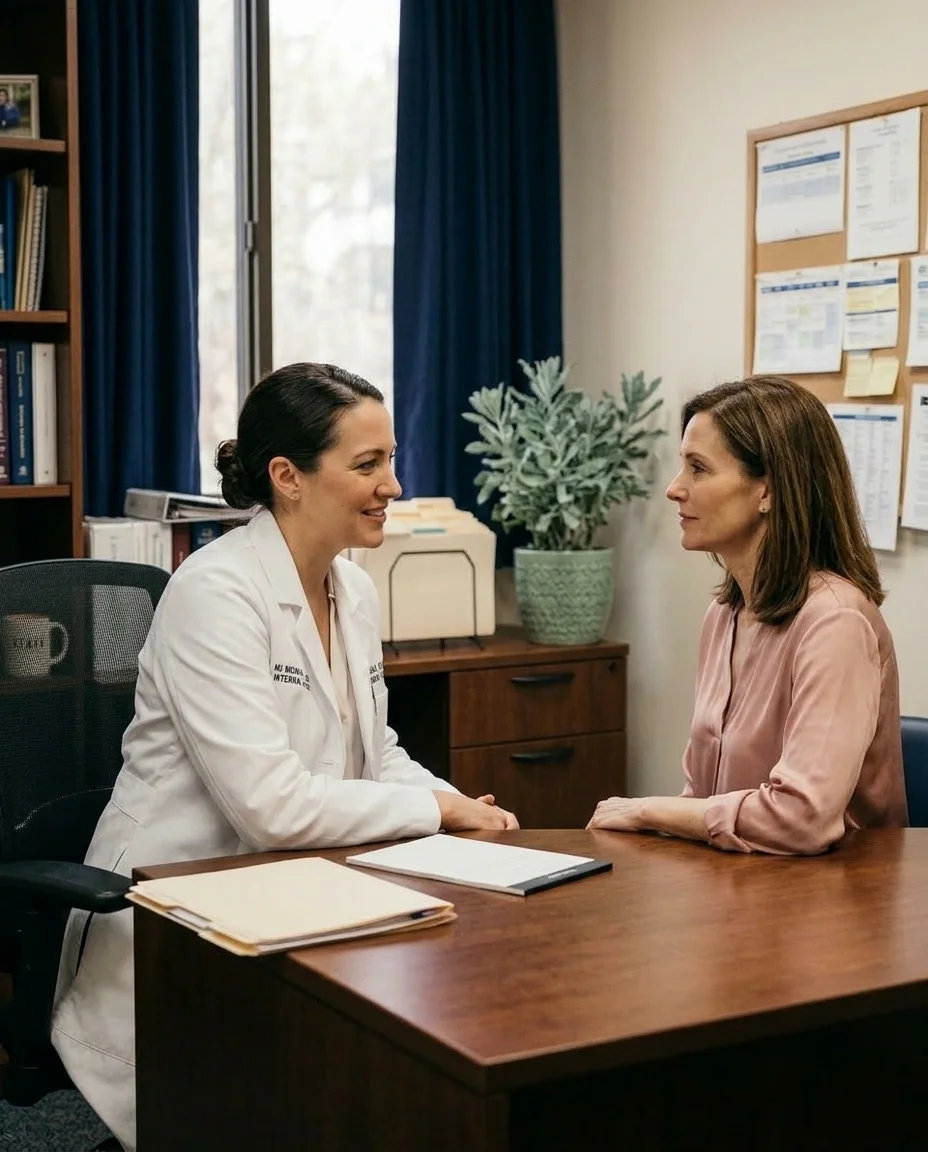
Ms.Medicine exists precisely to bridge that gap. The network provides affiliate physicians with operational support, marketing infrastructure, a structured onboarding process, and access to a community of physicians who have successfully made this transition. Affiliates practice under their own ownership, with full clinical autonomy, supported by a national network built around the specific needs of women's health and longitudinal care. The model is designed to let physicians do the thing they trained for — while someone else handles the infrastructure that has been consuming their days.
There May Be Another Way to Practice

The decision to leave a traditional practice is not made lightly. It carries real uncertainty, and it often arrives only after years of trying to make the existing model work. For many physicians, the moment of clarity comes not from a dramatic crisis but from a quiet accumulation: the realization that the gap between the care they want to provide and the care the system allows has become too wide to ignore.
If you are a physician asking whether there is another way — a model that allows the kind of care that brought you into medicine in the first place — the answer is that such models exist, are growing rapidly, and have a clear structural logic behind them.
The data on burnout describes what has been lost. The growth in concierge medicine describes where physicians are finding it again.