
Why Your Libido Changed: Understanding Low Libido in Women and What You Can Do About It

Last Updated: May 2026
Medically reviewed by Dr. Sameena Rahman, owner and founder of GYN & Sexual Medicine Collective
There is a version of this story that starts with a statistic. But you already know this is common. What you may not know is why it is happening to you specifically, what it means for your health, and whether anything can actually be done about it.
Low libido is one of the most frequently reported concerns in women's health and one of the least thoroughly addressed. Women bring it up in appointments and leave with a pamphlet. Or they do not bring it up at all because they are not sure it counts as a medical issue. It does.
Sexual desire is not a luxury component of your health. It is a signal. When it changes significantly, or disappears, or becomes something you have to manufacture rather than feel, that shift deserves the same clinical attention as any other symptom.
What "Low Libido" Actually Means
Hypoactive sexual desire disorder, or HSDD, is the clinical term for low libido that causes distress. That last piece matters. Not every woman who experiences a quieter season of desire has a disorder. But when the change is persistent, unwanted, and affecting your quality of life or your relationship, it warrants evaluation.
The 2025 international treatment guidelines published by a committee led by the University of California, San Francisco, are the first of their kind: a comprehensive clinical framework specifically for low sexual desire in women. The field has historically treated female sexual dysfunction as a footnote in broader reproductive health literature. These guidelines represent a meaningful shift toward taking it seriously as a standalone concern.
How Libido Shifts Across Life Stages
Understanding where you are in your hormonal life is often the first step toward understanding what is driving the change.
In the postpartum period, the biology is straightforward even when the experience is not. Breastfeeding suppresses estrogen, which can cause vaginal dryness and reduce desire. Layer on top of that the physical recovery from delivery, sleep deprivation, and the psychological adjustment to a radically different life, and decreased libido is not surprising. It is expected. That does not make it easier to live with, but it does mean there is nothing fundamentally wrong with you.
Perimenopause is harder to characterize because it is defined by variability. Hormone levels are not declining in a straight line; they are fluctuating, sometimes dramatically, and your desire may fluctuate with them. Some women notice an increase in libido during this period. Many notice a decrease. Many notice both at different points. The unpredictability is part of what makes perimenopause confusing, and why symptoms that feel contradictory often happen simultaneously.
After menopause, the hormonal picture stabilizes, but not in a favorable direction for sexual function. Estrogen levels fall and stay low. Vaginal tissue thins. Lubrication decreases. The physical discomfort that can result from these changes often compounds any psychological or relational factors that were already present. Research indicates that female sexual dysfunction affects a significant majority of menopausal women, somewhere between 68 and 86 percent, depending on the population studied. This is not a rare complaint. It is the norm, and it is largely undertreated.
The Full Picture: What Drives Low Libido

Hormones are the most obvious piece, but they are rarely the whole story.
Biological factors include not just estrogen and testosterone levels but also medications, chronic health conditions, thyroid function, and sleep quality. Some of the most commonly prescribed medications, including antidepressants, blood pressure drugs, and hormonal contraceptives, have documented effects on libido. If you started a new medication around the time things changed, that is worth discussing with your physician.
Psychological factors are equally significant. Stress and anxiety are probably the most common libido suppressants that women encounter, and they do not require a clinical level of distress to have an effect. Depression, body image concerns, and a history of trauma all play a role. There is also what researchers describe as the phenomenon of engaging in sex out of obligation rather than desire, a pattern that, over time, can erode the baseline of natural wanting that desire depends on.
Relational and social factors round out the picture. The quality of communication in a relationship, unresolved conflict, and mismatched desire levels between partners all affect libido. So does the broader cultural reality that women's sexual health concerns are frequently dismissed or minimized in medical settings, which discourages many from seeking evaluation at all.
““Low libido is not something women should accept as an inevitable part of aging or a stage of life. It is a medical concern with identifiable causes and effective treatments, and every woman deserves a thorough evaluation rather than a quick reassurance that this is normal.””
What Treatment Actually Looks Like
The most important thing to know about treating low libido is that effective treatment is rarely a single intervention and requires looking at the sexual function and treatment through a biopsychosocial lens. The conditions that contribute to it are layered, and the approach needs to match that complexity.
Lifestyle factors matter more than they are often given credit for. Regular exercise has demonstrated effects on sexual function. Stress reduction, whether through structured practices like mindfulness and yoga or through more practical changes to workload and schedule, meaningfully affects desire. Sleep is foundational. A body running on insufficient sleep does not prioritize sexual function, and no amount of other intervention fully compensates for chronic sleep deprivation.
Medical interventions depend on what is driving the problem. For postmenopausal women, local vaginal estrogen can address tissue changes and discomfort with minimal systemic absorption, and it is one of the most evidence-backed tools available. Systemic hormone therapy can address the broader hormonal picture. For women whose low libido is not primarily hormone-driven, there are FDA-approved medications specifically for this purpose. Flibanserin, taken daily, and bremelanotide, used as needed, both act on neurological pathways involved in desire rather than on physical arousal, an important distinction.
Psychological support is not a consolation prize when hormones are not the issue. Sex therapy and cognitive behavioral approaches have strong evidence behind them, particularly when relational dynamics or anxiety are contributing factors. It’s important to keep in mind that most women in midlife and in long-term relationships do not have spontaneous desire but instead have responsive desire to sexual cues or need to feel aroused first. Many women benefit from a combination of medical and therapeutic support simultaneously.
How Ms.Medicine Approaches This
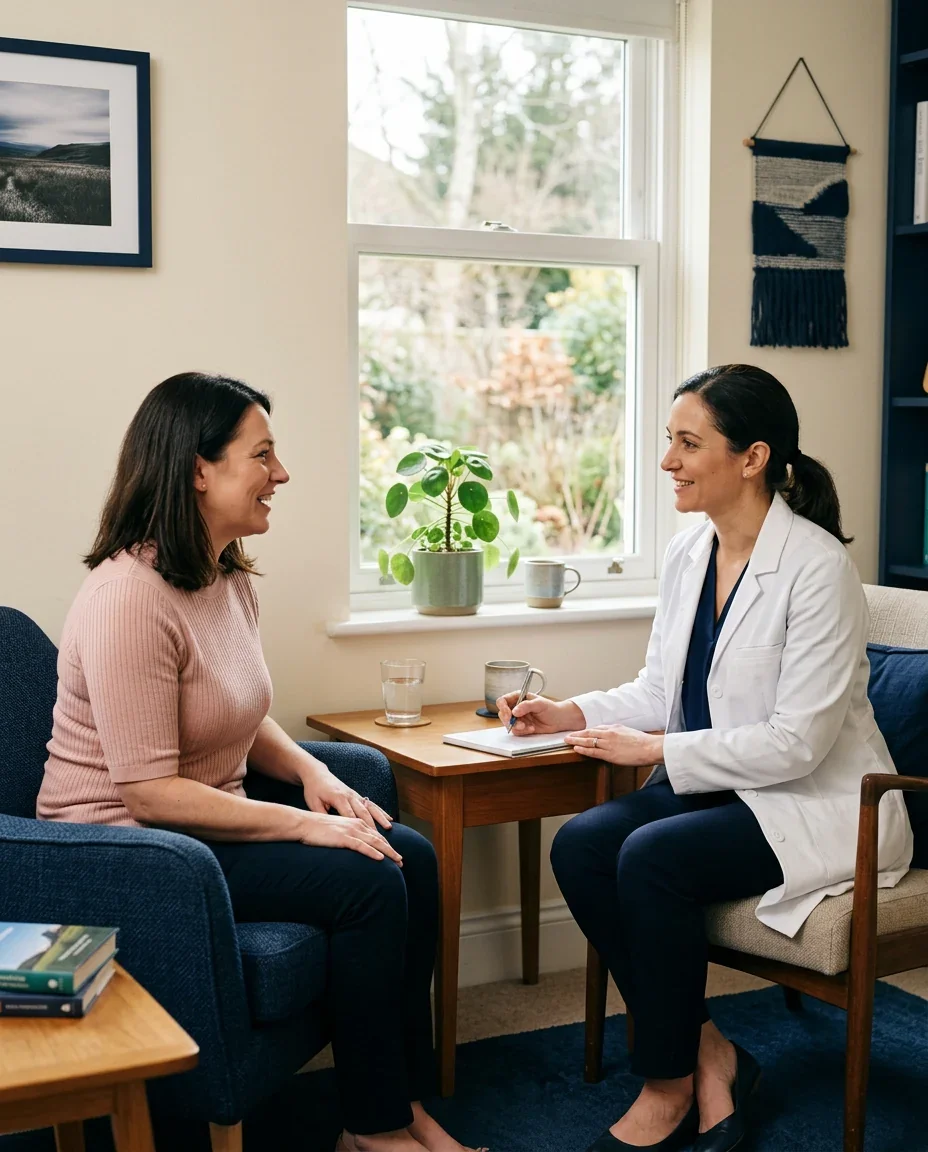
Concierge women's health is built for exactly this kind of complexity. When you have time, access, and a physician who actually knows you, you can get care that matches what is actually happening rather than care designed around a 15-minute appointment.
At Ms. Medicine, an evaluation for low libido starts with a thorough history and includes more than 70 biomarkers. We are looking at your hormones, but also your thyroid, your sleep, your medications, your stress levels, and the broader context of your life and health. The treatment plan that follows is built from that picture, not from a protocol applied uniformly to every woman who walks through the door.
Treatment may include bioidentical hormones, local vaginal therapy, FDA-approved medications for low desire, nutritional guidance, or referrals for psychological support. It may include all of the above, sequenced in a way that makes sense for where you are. You are not asked to choose between hormonal and non-hormonal options or to figure out the right approach on your own. You work through it with a physician who has the time and the information to help you make that decision well.
Ongoing follow-up is part of the model, not an add-on. Dose adjustments, symptom monitoring, and the kind of iterative refinement that effective hormone management requires are built into how we practice.
Download our free guide to sexual health and get a clear overview of what drives low libido, what treatment options are available, and what questions to bring to your next appointment. Visit msmedicine.com to access it.
This Is Not Something You Have to Navigate Alone

There is a version of how this goes where a woman notices her desire has changed, wonders if it is permanent, does not raise it with her doctor because she is not sure it is serious enough, and simply adjusts to a diminished version of her sexual self. That is the version we are trying to interrupt.
Low libido that causes distress is a medical issue. It has identifiable contributing factors. It has effective treatments. And the evidence from the 2025 guidelines is clear that the right approach is individualized, not generic, and that it should account for each woman's goals and her specific clinical picture.
You do not have to accept that this is just where you are now. You also do not have to figure out what to do about it on your own. What you do need is a physician who will take it seriously, evaluate it thoroughly, and work with you on a plan that actually fits. That is what we are here for.


The anti-aging aisle promises to turn back the clock on a woman's face — but the bloodwork, the bone density, the muscle she's quietly losing often go years without a look. Dr. Kelli Peiffer makes the case for a different measure of aging well: strength, capacity, and clarity.