
Be Empowered to Get the Best Care at Midlife and Beyond

Last Updated May 2026
As a woman approaching midlife, there are five health issues you should be thinking about and discussing with your doctor.
Menopause
Menopause is medically defined as no menstrual bleeding for 12 months (or surgical removal of the ovaries) and is an important milestone in a woman’s life. Many women recognize the bothersome symptoms of hot flashes and night sweats, but are unaware of the other important health consequences of menopause, including impact on heart health, bone health, sexual health, metabolic health, and cognition.
The pendulum has swung back and forth through time on hormone therapy; the evidence is clear that hormone therapy is indeed good. In younger healthy women close to menopause (within 10 years), hormone therapy is the gold standard and most effective treatment for hot flashes and night sweats, and is beneficial for bone, brain, heart, metabolic, and sexual health. The data also suggests that only 30% of women with severe symptoms are treated. Ladies, talk to your doctor!
If you are experiencing discomfort related to menopause, then hormone therapy might be your best option. If your doctor is uncomfortable discussing the data on hormone therapy, find a menopause expert in your community to talk to. A great place to start is The Menopause Society (TMS). Many great resources, such as FAQs, menopause blogs, a menopause guidebook, and “find a provider,” are available on NAMS’s website. Additionally, Ms. Medicine providers are well-versed in evidence-based practices for menopause and symptom management.

Breast Health
All women over 40 should get an annual mammogram, as these are an important preventative tool in the fight against breast cancer. While mammograms do not prevent cancer, they screen for the presence of cancer. Early detection is key, as studies show that tumor size at diagnosis affects survival. All women are at risk of breast cancer, and you may know the statistic that 1 in 8 will be diagnosed or that there is a 12% lifetime risk. It is important for all women to know their individual risk and whether it is higher or lower than average. A woman’s individual risk is impacted by many things- some that you can’t control (age at puberty, age at first live birth, age at menopause, breast density, family history) and some that you can control (body weight, diet, exercise, alcohol intake). Talk to your doctor about the validated risk assessment tools available to you and learn your risk. If your doctor is not familiar with the tools available or is unable to discuss your breast density and the impact that has on your risk, find a doctor who can. Take charge of your health and your future; you deserve it!
Sexual Health
During (and after) menopause, women often notice changes in their sexual health, such as dryness, irritation, and pain with intercourse. This condition, called the Genitourinary Syndrome of Menopause (GSM, previously known as vaginal atrophy) is caused by a decrease is estrogen that occurs naturally. These side effects are common and easily treated with safe and effective therapies- some over the counter and some prescription.
Often, we expect providers to ask about sexual health and are left frustrated when they don’t. It is hard to imagine that in 2021, with safe and effective treatments available, only 9% of women are treated for GSM. We know that women suffer in silence, but there is no need to be embarrassed; you need to talk to your doctor if you are having symptoms. If your provider seems uncomfortable or isn’t knowledgeable about available therapies, find a provider who is. Both The Menopause Society and the International Society for the Study of Women’s Sexual Health are great resources to empower yourself.

Bone Health
Most people don’t think about bone health or osteoporosis until their later years, but the truth is that women begin to lose bone in their mid 30’s. Bone loss accelerates around menopause, and it is critical that you have adequate calcium, exercise regularly, and stop smoking. All women should have one at age 65, but some younger women with higher risk factors also qualify for these scans. Talk to your doctor about your bone health and whether a bone density scan is right for you.
Cardiovascular Health
The leading cause of death in women is heart disease. It is critical for midlife women going through the menopause transition to evaluate their own heart health. Women’s risk factors for heart disease are different than men’s. We now know that women with a history of high blood pressure during pregnancy or gestational diabetes, and women with autoimmune disorders, are at higher risk for heart disease. These risk factors are often ignored, as is the additional risk that comes with menopause.
There are many changes throughout our bodies during menopause, including abdominal weight gain, increased fat around the heart, insulin resistance (diabetes), elevated blood pressure, changes in lipids, and other factors that increase the risk of cardiovascular disease. All women should have their cardiovascular risk (ASCVD risk score) assessed by their clinician at midlife. This score is based on your individual health history, your family history, your lifestyle habits, your weight, blood pressure, and cholesterol. By making changes to your lifestyle (and in some cases adding medication) you can lover your personal risk. Talk to your doctor and learn what steps you can take to reduce your risk of developing cardiovascular disease.
You deserve to live your best life, so start today by working with your provider to create a unique health and wellness plan that addresses your midlife concerns!
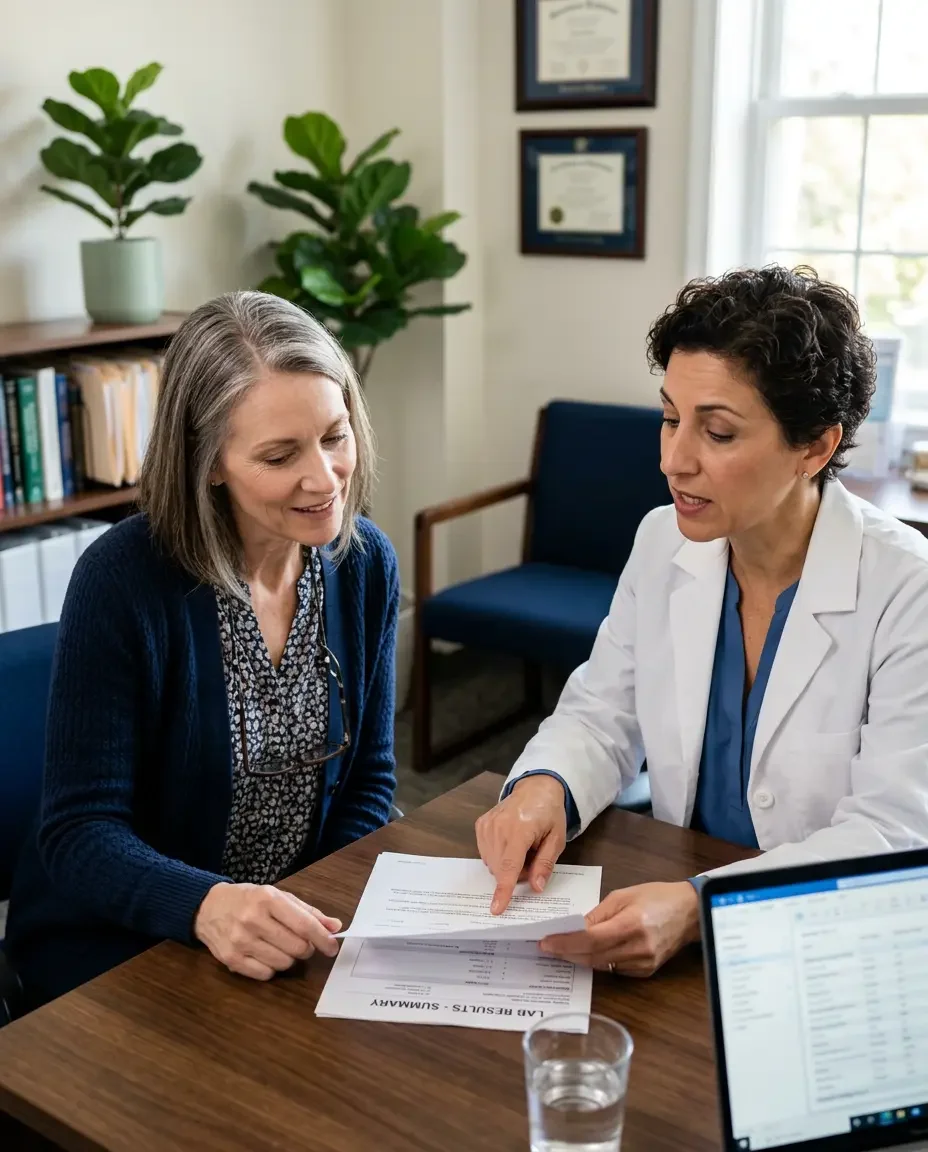



The anti-aging aisle promises to turn back the clock on a woman's face — but the bloodwork, the bone density, the muscle she's quietly losing often go years without a look. Dr. Kelli Peiffer makes the case for a different measure of aging well: strength, capacity, and clarity.